High-protein breakfast ideas from any UK supermarket
What a Scottish study found about higher-protein breakfasts and appetite, how much protein everyday breakfast foods give, and easy ideas to try.
Breakfast is the meal where most people I train fall short on protein. Toast, cereal or a pastry on the way to work is quick, but it often leaves you hungry by mid-morning. The good news is you don't need special products to fix it. Everything below is on the shelf in any UK supermarket.
What a Scottish study found
Researchers at the University of Aberdeen's Rowett Institute compared two weight loss diets in a trial published in the British Journal of Nutrition. Nineteen adults with overweight or obesity tried both, for 28 days each, with all their food provided. Both diets packed 45% of the day's calories into a big breakfast.
One version was higher in protein, the other higher in fibre. The higher-protein diet was better at keeping appetite down. The higher-fibre diet led to a little more weight loss, an average of 4.87kg against 3.87kg, and more of the gut bacteria thought to be helpful.
What that means for your breakfast
I'd read this as "why not both?" A breakfast with a good protein food plus some fibre from oats, wholemeal bread, beans or fruit gives you the fullness of one and the benefits of the other.
It's worth being clear about the limits. This was a small study, 17 of the 19 volunteers were men, and it changed the whole day's diet, not just breakfast. So it can't tell us that protein at breakfast alone makes the difference. It's one useful piece of the picture.
How much protein to aim for
Most of us already eat enough protein over a day. The British Nutrition Foundation says the average UK diet is above the recommended amount. It adds that some people, such as athletes and older adults, may need more.
The BNF notes that about 20 to 25g of high-quality protein after training "seems sufficient" to get the most out of muscle building, and that spacing protein across the day may help people doing intensive exercise. It also says your total for the day matters more than timing for muscle growth. A breakfast with 20g or so is a sensible target, and our guide on how much protein you need helps you work out your daily figure. If you train before work, that could simply be breakfast after a session of goblet squats, push-ups and dumbbell rows.
Protein in everyday breakfast foods
These are rough figures, worked out from the per 100g values the BNF publishes from the UK's official food tables. Brands vary, so check the label.
- Eggs: 14.1g per 100g boiled, so two medium eggs give you roughly 12 to 15g
- Cottage cheese: 150g is about 14g
- Plain Greek-style yoghurt: 200g is about 11g, and fat-free Greek-style yoghurts and skyr are often higher, so check the pot
- Semi-skimmed milk: 300ml is about 10g
- Baked beans: half a 400g tin is about 10g
- Tofu: 150g is about 12g
- Reduced-fat Cheddar: 30g is about 8g
- Almonds: a 30g handful is about 6g
Seven high-protein breakfast ideas
- Scrambled eggs on wholemeal toast with a little grated reduced-fat Cheddar. Two eggs and 30g of cheese gets you past 20g before you count the toast.
- Overnight oats made with 200ml of semi-skimmed milk and 150g of Greek-style yoghurt, then topped with berries. That's around 15g from the dairy alone, plus fibre from the oats.
- Cottage cheese on toast with sliced tomatoes and black pepper. Quick, cheap and around 14g from a 150g serving.
- Beans on toast with an egg. Half a tin of beans and one egg gives you roughly 16g, plenty of fibre and costs very little.
- Yoghurt bowl with 200g of Greek-style yoghurt, a chopped apple and 30g of almonds, for about 18g.
- Tofu scramble with spinach and mushrooms on toast, for a plant-based option with about 12g from the tofu.
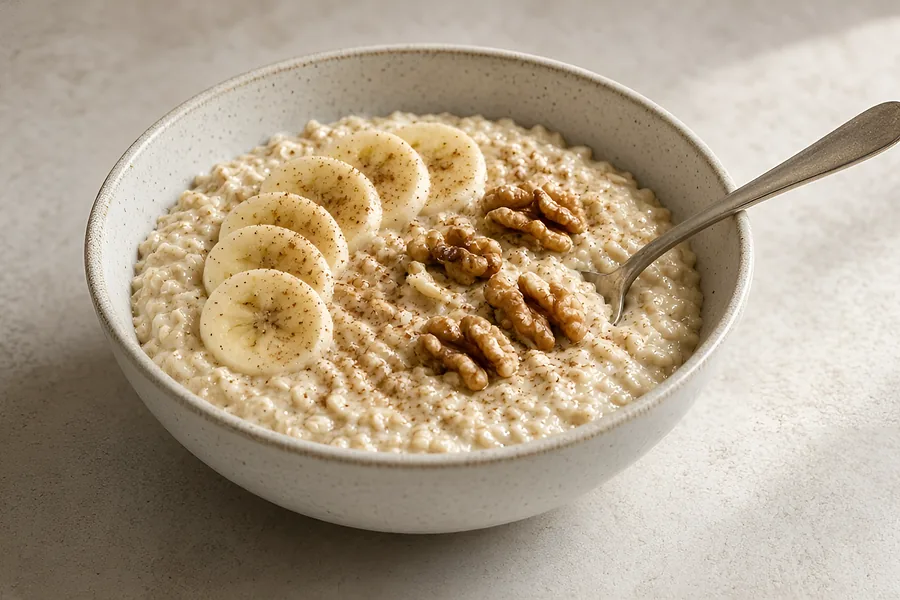
- Porridge made with milk, with a spoonful of yoghurt stirred in at the end. A familiar breakfast with a bit more staying power.
Making it work on a weekday
If mornings are rushed, prep the night before. Overnight oats keep in the fridge, and a few eggs boiled on Sunday will see you through to Wednesday. Our guide to cheap high-protein meals has a shopping list built around the same budget staples.
You don't need a shake to get there either. If you're curious, our post on whether you need protein powder looks at what dietitians say.
If you have a kidney condition, diabetes or another health condition, or you're on a special diet, check with your GP or a dietitian before making big changes to how you eat.
If you'd like breakfast, lunch and dinner planned for you, with recipes and a food diary in one place, that's what a FitFitCity membership is for.
This post is general information, not medical advice. If you have a health condition or concerns, speak to your GP or another qualified professional before changing how you eat or exercise. Read our health and fitness disclaimer.
Try FitFitCity free for a week
Start with a free week of full member access: training plans, the workout log, the food diary and 225 recipes. No card needed.
After that, membership is £79 a year, or £9.99 a month on a 12-month minimum.
Start my free weekSee what’s inside